Christian ConcernGlobal News/Middle East-WestGlobal News/World AffairsReligious Freedom and Persecution

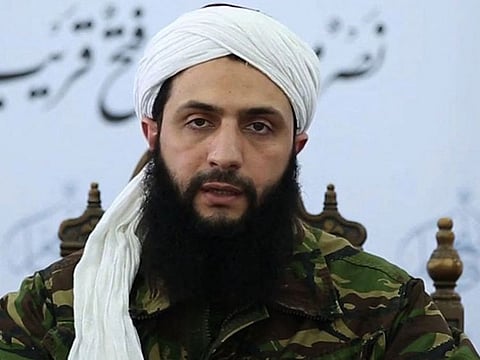
EU Commission invites HTS leader Al-Julani to a donor conference in Brussels on March 17-
A look at the extremist outfit's history reveals how awful it is!
March 11-
EU Commission invites HTS leader Al-Julani to a donor conference in Brussels on March 17 He slaughtered thousands of civilians including many women and children in the last couple of days.
-
The Syrian Civil War, ongoing since 2011, has created a volatile environment, with recent reports highlighting severe violence against minorities, including Christians and Alawites, following the fall of Bashar al-Assad’s regime in December 2024.
-
Human rights groups, such as the Syrian Observatory for Human Rights, reported over 1,300 deaths in just 72 hours in early March 2025, with many described as executions and massacres targeting the Alawite community, which supported Assad, and Christians.
-
The Sunni Islamist group Hay’at Tahrir al-Sham (HTS), led by Ahmed al-Sharaa, overthrew Assad and now governs Syria, but reports suggest revenge killings by various armed factions have escalated, including alleged crucifixions and mass executions of Christians.
-
Web reports from Newsweek, The Washington Post, and NPR confirm hundreds to thousands of deaths among religious minorities since late 2024, with specific incidents in Alawite heartlands like Latakia and Jableh, and targeted attacks on Christian communities.
-
The UN Commission of Inquiry on Syria and other organizations have documented ongoing violations, but specific evidence for genocide claims—requiring intent to destroy a group—remains under investigation, with no official UN genocide designation as of March 2025.
-
Historical context shows Christians in Syria, comprising about 10% of the population, have faced persecution during the civil war, with jihadist groups like ISIS and Nusra Front previously targeting them, as noted in BBC and Human Rights Watch reports from 2015 and 2024.
Details on HTS Governance
Post analysis currently uses a smaller model.
Here are detailed insights into the governance of Hay’at Tahrir al-Sham (HTS) in Syria, particularly following their takeover and establishment of control after the fall of Bashar al-Assad’s regime on December 8, 2024. This information is drawn from the provided web results, X posts, and the broader context of the Syrian civil war as of March 2025.
1. Formation and Leadership
-
Formation: HTS was established on January 28, 2017, as a merger of several Islamist and jihadist groups, including Jabhat Fateh al-Sham (formerly al-Nusra Front, an al-Qaeda affiliate), Ahrar al-Sham factions, and others like Ansar al-Din Front and Nour al-Din al-Zenki Movement. It was led by Abu Mohammed al-Jolani (real name Ahmed al-Sharaa), a key figure who has evolved from a jihadist commander to a pragmatic leader focusing on Syrian governance.
-
Leadership Transition: After toppling Assad, al-Sharaa became Syria’s interim leader, positioning himself as a figurehead for a post-Assad Syria. He has publicly distanced HTS from its al-Qaeda and ISIS roots, emphasizing a Syria-focused agenda and rejecting attacks outside the country.
2. Territorial and Administrative Control
-
Pre-2024 Control: By 2018, HTS had established military control over 80% of Idlib province and parts of northwest Syria, cracking down on rival factions like al-Qaeda affiliates (e.g., Hurras al-Din) and IS splinter cells. It governed through the Syrian Salvation Government (SSG), a parallel administration in Idlib since 2017, focusing on civil services, law enforcement, and humanitarian aid.
-
Post-Assad Expansion: Following the rapid offensive in late 2024, HTS expanded its control across Syria, capturing key cities like Aleppo, Hama, Homs, and Damascus. It now dominates most of Syria, with the SSG serving as the de facto government in opposition-held areas, including Idlib, and extending its influence nationwide.
-
Administrative Structure: HTS has implemented a governance model through the SSG, which includes ministries for defense, interior, education, health, and justice. The SSG operates independently of the former Assad regime’s institutions but integrates some pre-existing bureaucratic structures, such as the Education Directorate, using modified Syrian government and UNICEF curricula (excluding Ba’athist propaganda).
3. Governance Policies and Practices
-
Pragmatic Shift: HTS, under al-Jolani, has pursued a “Syrianisation” strategy, aiming to establish a stable civilian administration rather than a strict jihadist state. This includes:
-
Service Provision: HTS has focused on reconstruction projects, such as the Bab al-Hawa Industrial City and reopening border crossings (e.g., al-Ghazawiya) to connect with Turkish-held territories. It levies taxes at key border points like Bab al-Hawa, generating significant revenue (up to $15 million monthly) to fund governance and military operations.
-
Religious and Minority Policies: HTS has engaged with minority groups, including Christians and Alawites, to project inclusivity. Web reports (e.g., Washington Post, NPR) note efforts like rebuilding churches in Idlib, meeting with Christian leaders, and repatriating confiscated properties of minorities. However, these efforts are marred by allegations of human rights abuses and targeted violence against Alawites and Christians post-2024, as seen in X posts and news reports of revenge killings.
-
Law Enforcement: HTS has established religious police units but dismantled them in 2020 due to public backlash, indicating responsiveness to local sentiment. It maintains law and order through its security forces, but clashes with armed groups (e.g., Alawite militias, Kurdish forces) have led to violence, as reported in The Washington Post on March 7, 2025.
-
-
Military Integration: Post-Assad, HTS announced plans to unify various militia groups into a national army under the Ministry of Defense, excluding jihadist factions focused on international terrorism (e.g., IS). This aims to consolidate power and stabilize Syria, but tensions with Turkey-backed groups and Kurdish forces persist.
4. Challenges and Criticisms
-
Human Rights Concerns: Despite claims of moderation, HTS is designated a terrorist organization by the UN, US, Turkey, and others due to its jihadist origins and past atrocities. Reports (e.g., BBC, Human Rights Watch) highlight alleged abuses, including arbitrary detentions, executions, and attacks on minorities, with recent X posts and news articles (e.g., Washington Post) documenting revenge killings of Alawites and Christians in 2025.
-
Sectarian Tensions: The fall of Assad has triggered sectarian violence, with Alawite and Christian communities fearing genocide or persecution. HTS has struggled to control “unorganized popular crowds” committing violations, as admitted by an Interior Ministry official in The Washington Post, leading to operations against armed Alawite groups in Latakia and Homs.
-
International Relations: HTS maintains a complex relationship with Turkey, which provides a “green light” or support (as per NPR and X posts) but does not directly fund or arm HTS, according to experts. Israel, the US, and Jordan have historically supported rival secular rebel groups, not HTS, though Israel’s actions (e.g., airstrikes, territorial seizures) post-Assad indicate strategic interests. Russia, a former Assad ally, has withdrawn but reportedly protects Christian refugees, per X trends.
5. Economic and Funding Mechanisms
-
Self-Funding: HTS is largely self-sufficient, raising funds through taxes, border crossing fees, and confiscating weapons from rival groups, as noted by NPR. It has not publicly disclosed donor lists, but speculation (e.g., X posts, NPR) suggests indirect benefits from Turkey, Israel, or Ukraine via captured or reverse-engineered equipment.
-
Economic Challenges: Rebuilding Syria’s war-torn economy is a major hurdle, with HTS focusing on infrastructure projects and humanitarian aid coordination, but funding shortages and international sanctions (due to its terrorist designation) limit progress.
6. Current Status (March 2025)
-
HTS, through the SSG, is Syria’s de facto government, but its governance is fragile due to ongoing violence, sectarian divisions, and international isolation. Al-Sharaa has pledged inclusivity and a rejection of revenge, but reports of crucifixions, mass killings, and targeting of minorities (as seen in PeterSweden7’s X post and related threads) suggest ongoing instability and potential human rights crises.
-
The group faces internal and external pressures, including from Kurdish-led forces, Turkish-backed factions, and Alawite militias, as well as international scrutiny over its terrorist designation and governance legitimacy.
Conclusion
HTS’s governance model under al-Sharaa combines pragmatic administration with its jihadist roots, focusing on stability and services in Idlib and beyond while facing significant challenges in managing sectarian violence and international relations. While it has made strides toward inclusivity, recent reports of atrocities (e.g., X posts, Washington Post) indicate that its control is contested and its governance is far from stable or universally accepted as of March 2025. The long-term success of HTS’s governance will depend on its ability to address human rights concerns, stabilize Syria, and navigate complex regional dynamics.