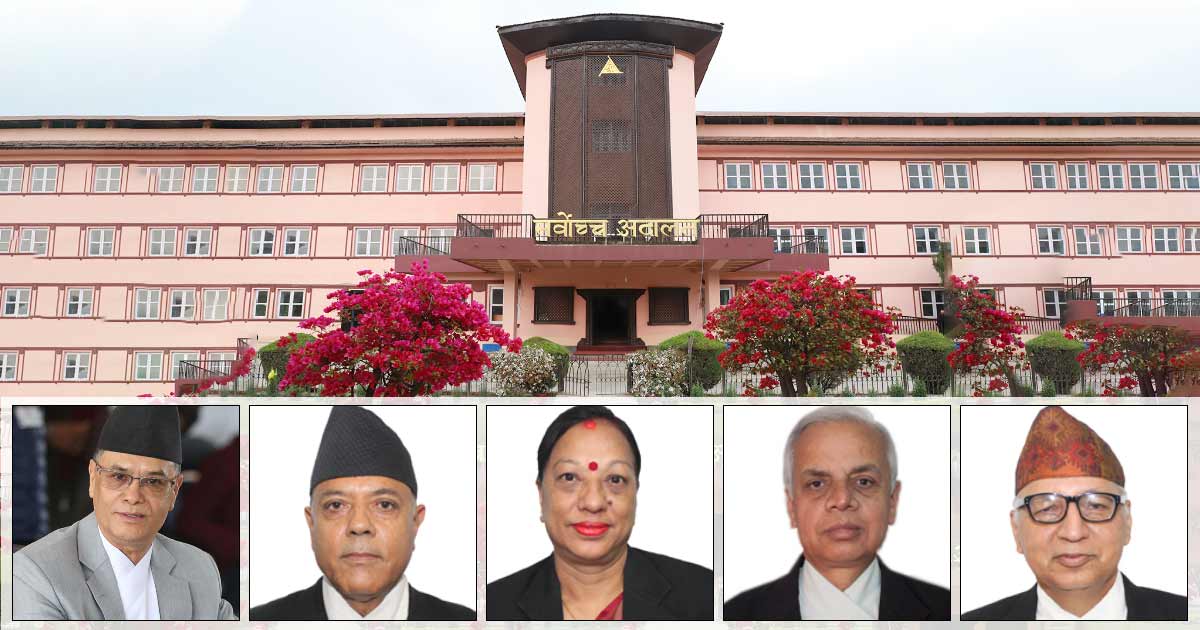
The legislative has rejected the Supreme Court’s mandate: Attorney General Badal
Strong arguments presented against same sex marriage at Nepal Supreme Court


March 16-
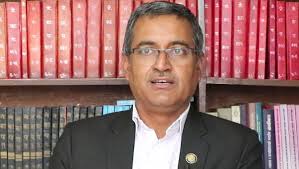
Kathmandu. Attorney General Ramesh Badal has called the Supreme Court’s order recognizing same-sex marriage a mistake of the court. Attorney General Badal said this during a hearing at the Supreme Court on Sunday, March 16.
The Supreme Court had issued an interim order on Ashad 12, 2080, allowing homosexuals, as well as gender and sexual minorities, to marry people like themselves. A single bench of Justice Til Prasad Shrestha had issued an interim order to temporarily register marriages between homosexuals on the demand for legal recognition of same-sex marriage filed by Sanjeev Gurung alias Pinky Gurung on behalf of the Blue Diamond Society.
Then, Yubaraj Poudel filed a writ petition in the Supreme Court, demanding that the same order not be given legal recognition to same-sex marriage, saying that it would lead to social disintegration and affect the history, identity, pride and civilization of Nepalis.
Both the writ petitions were heard together, and when it was heard on December 12, a joint bench of Justices Sapana Pradhan Malla and Sunil Kumar Pokharel kept the case under review.
Then, when the case was heard on Sunday, Attorney General Ramesh Badal, arguing on behalf of the government, said that marriages between homosexuals or sexual minorities are not recognized by law and that such marriages should not and cannot be registered.
During the hearing, when Justice Sapana Pradhan Malla reminded the court that the court had already issued an order on the issue of same-sex marriage and asked it to be registered, Attorney General Badal retorted, “Why did the court issue the order?” That order is wrong.’
Then Judge Malla asked the Attorney General, ‘Then why didn’t you come and seek a review?’ Badal replied, ‘That is a mistake made by the court, and the court should correct it.’
Attorney General Badal argued that such marriages cannot be registered, saying that the law does not recognize gender and sexual minority or same-sex marriages.

Badal said that under the Family Law, Sections 67, 68, 70, 71, 72, etc. of the Civil Code mention that a man and a woman must be married, and that the word ‘person’ in Section 69 should not be misinterpreted and that section should also be understood as a continuation of Section 67.
Justice Malla asked why marriages between gender and sexual minorities should not be recognized when the Constitution has recognized and accepted their identity.
In response, Attorney General Badal said that accepting gender and minority identity means acquiring citizenship and securing other rights, but the law does not recognize same-sex marriage. He argued that the law uses the words “woman and man” for marriage, and that only women and men who are qualified to get married should be married.
In 2064 BS, a writ was filed in the Supreme Court on behalf of the Blue Diamond Society, asking for a law to be made for same-sex marriage, and the bench also demanded the reason for not making the law. In response, Attorney General Badal claimed that the legislature rejected the Supreme Court’s mandate.
He said, “A new constitution was made after the Supreme Court’s mandate, and the rights of gender and sexual minorities have been mentioned there, and it has been accepted.” But as far as same-sex marriage is concerned, the legislature has rejected the Supreme Court’s mandate in that regard.’
After Attorney General Badal claimed that the law does not recognize same-sex marriage, Justice Sunil Kumar Pokharel asked Badal, ‘Is Section 69 of the Code a different subject and interpretation or a continuation of Section 67?’ In response, Attorney General Badal said, ‘It cannot be viewed in another way, it is the same and there must be a man and a woman for marriage to take place.’
Attorney General Badal said that the law does not recognize same-sex marriage and if it is opened by the court, many sections of the law will have to be changed, claiming that the court does not have such authority. Badal further said, ‘The Constitution was promulgated by the Constituent Assembly, the law was made by the Legislature. The mention of gender and sexual minorities in the law means that the identity is accepted, it means that services and facilities are provided, not that marriage is allowed. It should be understood that the constitution adopted some parts of the mandate in Sunil Babu Pant case, and rejected some parts.’
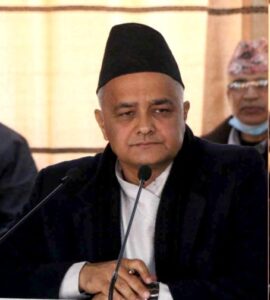
Towards the end of the debate, Justice Malla asked, ‘Is the mandate being demanded? Should it be given or not?’
In response, Attorney General Badal said that if same-sex marriage is to be accepted, the lawmakers should make a separate law. Stating that the court cannot order and say go ahead, he argued that although equality has been mentioned in other rights, there is no such provision regarding marriage.
The lawyers arguing in the writ petition that homosexuals and gender and sexual minorities should be allowed to marry said that such marriage should be divided into three parts.
First, sexual orientation. Second, they said that it should be separated based on sexual characteristics and third, based on gender identity. Stating that it may be different for those in other divisions than just same-sex marriage, he said that all types of gender and sexual minorities should be able to marry the person they want, and that such a system should be implemented in every country in the world.
Advocate Prakash Nepali and others argued that the constitution, while recognizing identity, does not recognize the right to marry, and the state should formulate a proper policy on this issue. 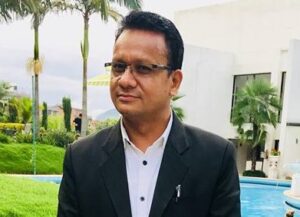
Speaking in the writ petition filed demanding a ban on same-sex marriage, advocates said that such an issue is influenced by atheistic views and that there is a danger that Nepal could gradually become a hub for same-sex marriage or homosexuality.
Stating that one of the purposes of marriage is to have children, he warned that marriages between people of the same sex may not produce children and endanger the life cycle.
The advocates who argued on behalf of the party that same-sex marriage should not be recognized, argued that such marriages should not be recognized, citing a survey report conducted in the UK that depression increases four times during same-sex marriages and increases HIV infection by 70 percent.
The hearing of the case concluded on Sunday, and the verdict is scheduled to be delivered on Tuesday, March 18.
#Same_Sex_Marriage #Nepal, Issues #Transgenderism #Marriage_Act #Blue_Diamond_Society